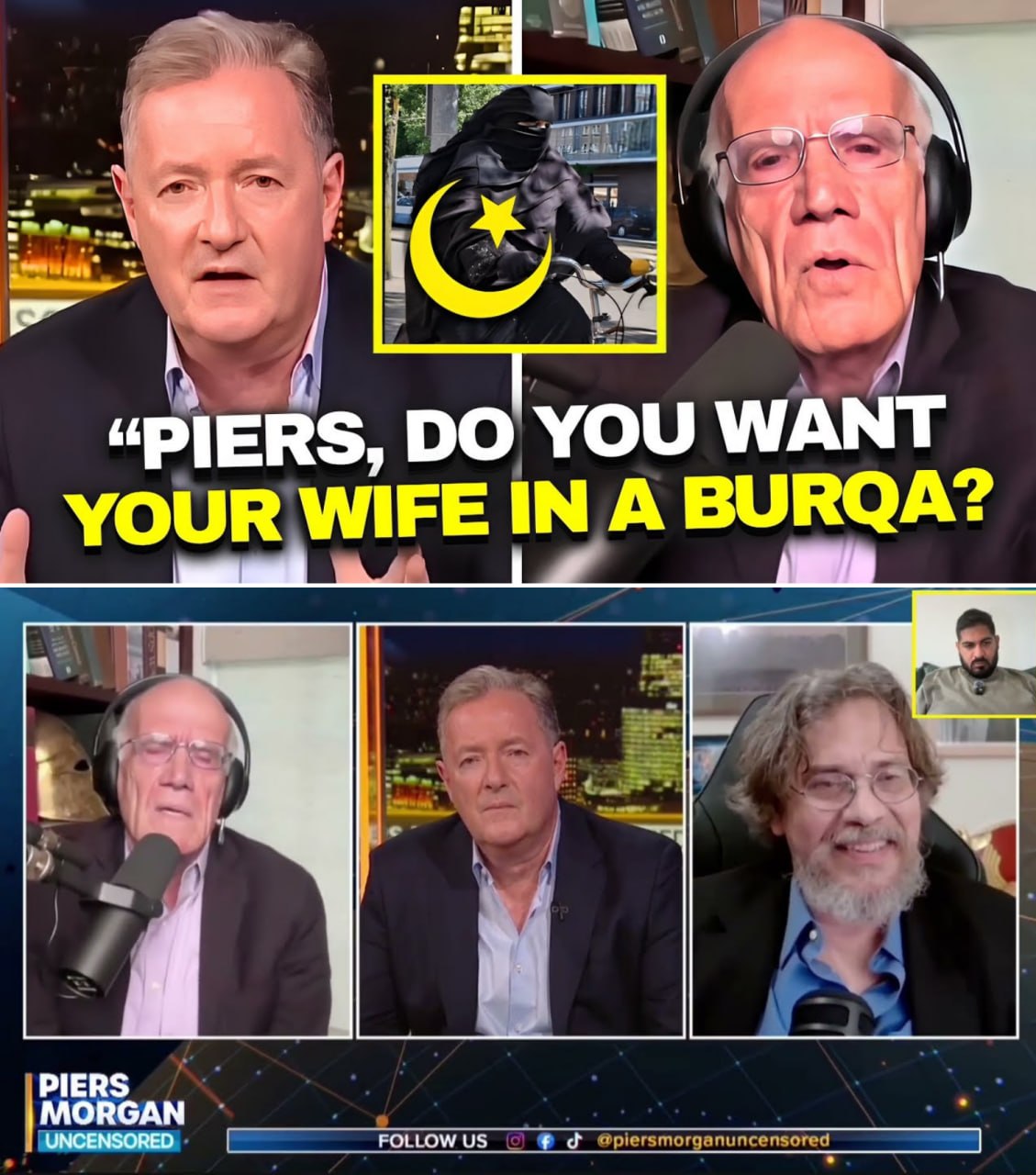
The VDH vs. Piers Morgan Showdown: Religious Liberty and the Middle East Double Standard
Preview: In a viral segment on Piers Morgan Uncensored, historian Victor Davis Hanson (VDH) squared off against the host over the Israel-Palestine conflict. The debate reached a boiling point when VDH challenged Morgan on the lack of religious freedom in the Gulf States, leaving the host momentarily silenced.
The Clash of Civilizations: Transparency and Power
The interview began with a discussion on NATO and global military investments, but quickly shifted to the moral standing of Israel versus its neighbors. Victor Davis Hanson argued that Israel remains the only “consensual society” in the Middle East—one defined by transparent elections, free speech, and the protection of religious minorities.
Piers Morgan attempted to counter this by questioning Israel’s lack of transparency regarding its nuclear capabilities. Morgan pressed VDH on why Israel is “allowed a pass” on admitting it possesses nuclear weapons. VDH retorted that most nuclear powers, including the U.S. and Russia, maintain levels of ambiguity regarding their exact ready-state arsenals, and that Israel’s “no comment” policy is a standard defensive posture in a region where it is surrounded by 500 million people in hostile states.
The Religious Freedom Litmus Test
The most intense moment of the exchange occurred when VDH pivoted from military tactics to fundamental human rights. He posed a direct challenge to Morgan:
“Can you go to the UAE or any of the Gulf States and say, ‘I don’t want to be a Muslim, I want to be a Christian or a Jew and I want to open a church or a synagogue?’ No.”
VDH highlighted that while an Israeli citizen can freely choose to be an observant Jew, a Muslim, or a Christian without state persecution, the same cannot be said for the citizens of the Islamic states Morgan was defending. When Morgan attempted to argue that he had broadcasted his show “uncensored” from the Middle East, VDH dismantled the point by noting the “famous guest” exception.
The “Famous Guest” Fallacy
VDH pointed out that as a world-renowned journalist, Morgan is granted a level of protection that local citizens are never afforded. “If you were a citizen of those countries, you couldn’t do that,” VDH insisted. He challenged Morgan to name a single resident of the UAE or Saudi Arabia who has come on his show to openly attack their own government while still residing in that country.
Faced with this reality, Morgan was forced into a rare moment of concession, admitting, “I don’t think they would tolerate open dissent about the government… that’s probably fair.”
The Response: A Call for Real Representation
The segment has sparked criticism from those who feel that “ivory tower” debates between professors and television hosts lack the raw perspective of those actually connected to the region. Commentators have noted that while VDH defended the Israeli side with historical rigor, the format of the show often prevents guests from completing complex thoughts.
As the conflict continues, this debate serves as a stark reminder of the “asymmetry of freedom” in the Middle East—a factor VDH argues is the primary reason why Western-style democracies like Israel are viewed with such hostility by neighboring autocracies.
Conclusion: Ambiguity or Accuracy?
The interview ended with more questions than answers regarding the future of the region, but it solidified the growing divide in media narratives. While Morgan focused on the “open-air” status of Gaza, VDH remained focused on the fundamental lack of civil liberties that define the regimes surrounding the Jewish state.
Who won the exchange? That depends on whether you value the “empirical” transparency of elections or the “official” transparency of nuclear silos.